
With expansion into Asia, Skala is set to reach over 100 countries by 2027
The brand, which has adopted “Brasil” as part of its name, ranks fifth in the US hair treatment market and could see 40% of its revenue come from exports within three years.
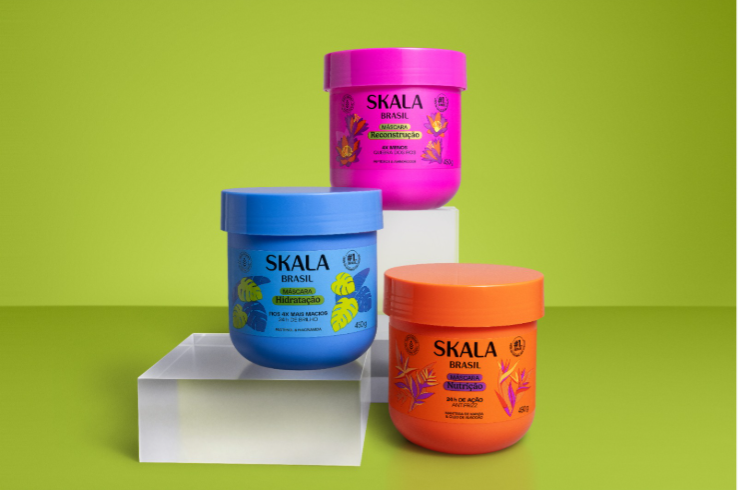
Skala Brasil is the new name adopted by the hair care brand founded 40 years ago in Uberaba (Minas Gerais) and famous for its large tubs of treatment cream. The change in branding is part of a rebranding project that began in 2024, when the fund Advent International acquired control of the brand.
“We decided to reposition Skala; while it had enormous household penetration in Brazil within the treatment category, it wasn’t achieving the same success with other products in the hair care routine,” states Luis Delfim, CEO of Grupo Bora Brasil, which also owns Lola from Rio.
He explains that the repositioning was planned around three key points. The first was portfolio diversification, entering new categories such as hair styling gels and oils, which were launched last year. Next came a packaging update, highlighting ingredient benefits to make it easier for consumers to identify the right solutions. Finally, the brand devised a new communication plan that emphasizes its Brazilian identity.
Despite being recognized by 97% of Brazilian women—according to Kantar Insights’ Brand Tracking—“many consumers didn’t know Skala was a Brazilian brand. We embody Brazilian spirit, and we needed to communicate that to people,” the executive says.
A focus of international expansion, the US has become Skala’s second-largest market.
He notes that the name Skala Brasil was actually adopted in the US first. When the company—now under Advent’s control—began building a more robust internationalization structure, the US became the primary focus for exports. “We opened a company and a distribution center in the US. We have direct business relationships with the country’s largest retailers, such as Walmart and Target.” Skala currently ranks fifth in the US hair treatment segment; the US is the company’s second-largest market, trailing only Brazil.
Over the past two years, the brand has more than doubled its global footprint, expanding from around 40 countries to over 80. “We used to work with a few distributors but lacked a precise, long-term strategy for each market. So, we conducted an assessment and identified new regions. Today, we have a dedicated commercial manager for every continent,” the CEO notes.
After the US, Skala’s key commercial partners include Colombia, Argentina, Portugal, and Spain. “We have a major operation in the United Arab Emirates, based in Dubai, so our presence there is very strong; we are also seeing rapid growth in countries like South Africa and Morocco. India is our next big bet.”
Major growth opportunity in Asia
Delfim notes that while the brand is already present in several Asian countries, he sees significant room for further growth across the continent. “Asia is home to the world’s largest population, and many of its countries—whether due to income levels or hair types—are a great fit for Skala.”
Driven by growth in Asia, Skala is on track to expand its presence to over 100 countries by 2027. “Brazilian cosmetics—especially hair care products—are internationally recognized for their high quality. The world knows that Brazilian women have beautiful, well-cared-for hair. That ‘Brazilian touch’ is highly valued. Another advantage of being a Brazilian brand is that, thanks to our population’s immense diversity, we offer a product portfolio that adapts to any market worldwide.”
International trade currently accounts for 15% of Skala Brasil revenue. The CEO aims to raise this figure to 40% over the next three years.
To keep pace with this growth, the brand will build a new factory in Uberaba, with a projected investment of R$ 150 million. “We are currently in the earthworks phase. Construction will begin early next year, and by 2028, we will have the most modern factory in Brazil—one that will not only increase our capacity but also further elevate our already high quality standards, bringing greater efficiency and innovation to everyone.”